Everyone wants the major league internship.
But very few students ask a smarter question: Where will I actually learn the most?
It is easy to picture yourself courtside at an NBA arena or working on the sidelines of an NFL game. The brand recognition is powerful. The setting feels big. The logo looks impressive on a résumé.
But prestige and preparation are not always the same thing.
If your goal is to build real competence early in your career, hands-on experience often outweighs brand prestige.
Let’s break down what that actually means.
How Much You’ll Actually Do
One of the biggest differences between minor league and major league internships is responsibility.
In minor or lower league organizations, staff sizes are usually smaller. That often means interns are trusted with more. You might help plan game-day promotions, support sponsorship activations, manage social media, assist with ticketing initiatives, and attend community events. Sometimes all within the same week.
A marketing intern with a minor league baseball team might run game-day social media, write sponsor recap reports, and help execute promotions in one season.
In a major league organization, internships are typically more specialized. You may be assigned to one department with a defined scope. A marketing intern at that level might focus exclusively on one campaign or one reporting stream.
The projects may be high-profile. The exposure may be impressive. But your individual impact can feel narrower.
Neither structure is wrong. They simply offer different learning environments.
Skill Development
Minor league internships often develop breadth.
You see how marketing connects to ticket sales. How operations affect sponsorship delivery. How community engagement supports brand growth. You gain a working understanding of how the business functions as a whole.
This kind of exposure can be especially valuable early in your career when you are still figuring out what you want to specialize in.
Major league internships often develop depth.
You may gain advanced experience in analytics, partnership strategy, digital media, or operations within a specific department. That depth can be powerful if you already know exactly where you want to focus.
The question is not which is better. The question is what you need right now.
Networking and Mentorship
In smaller organizations, access is often closer.
You may work directly with managers, directors, or even senior leadership. Supervisors are more likely to see your work up close. That visibility can lead to stronger recommendations and long-term mentorship.
In major league settings, the network is broader. You are surrounded by experienced professionals across multiple departments. The opportunity to connect is there, but it often requires more intentional effort on your part.
Smaller organizations may give you proximity. Larger organizations may give you scale.
Compensation and Perks
Compensation varies widely at every level.
Some minor or lower league internships are unpaid or stipend-based, though they may include housing support, meals, or unique access to events.
Major league internships are more likely to offer hourly pay or structured programs, but they are highly competitive.
Pay matters. But so does what you walk away with in skills, experience, and clarity.
Visibility and Résumé Impact
There is no denying the power of brand recognition.
A major league name on your résumé can open doors and spark interest.
But here is what employers really care about once you get in the room: What did you actually do?
In smaller organizations, it is often easier to point to measurable accomplishments. You can explain the campaign you helped run, the activation you executed, or the fan engagement initiative you supported.
Prestige may get attention. Responsibility builds credibility.
Pathways to Future Opportunities
Many sports professionals begin in minor or lower leagues and move upward over time. The broad skill set and operational experience they gain becomes a foundation for bigger roles later.
Others start in major league environments and grow within a specialized track.
Both paths can work.
Your career will move forward based on what you can do, who trusts you, and the results you can show.
The Bottom Line
Minor league and major league internships offer different types of growth.
Smaller organizations often provide greater responsibility and broader exposure.
Larger organizations offer structure, specialization, and brand recognition.
Do not assume that bigger automatically means better for your development.
Ask yourself the smarter question: Where will I learn the most right now?
The answer might surprise you.
💡 Want more student-focused career guidance and a weekly list of current sports internships? Sign up for The Sports Intern weekly newsletter and stay one step ahead in your career search.
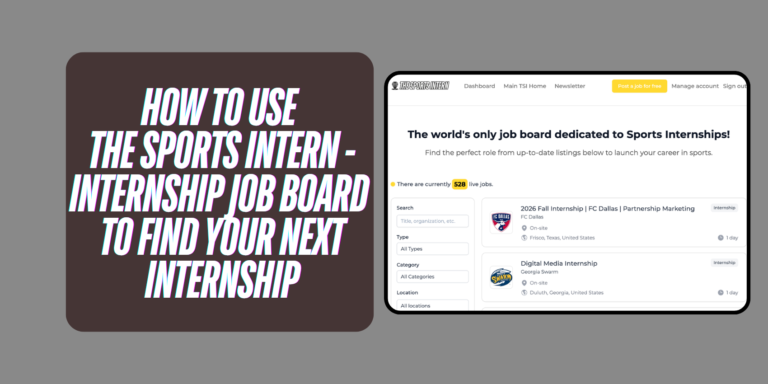
🔍 TSI has the world’s only job board dedicated to Sports Internships. Explore open roles here.